
Leveraging technology for traceable impact: our first carbon credit issuance
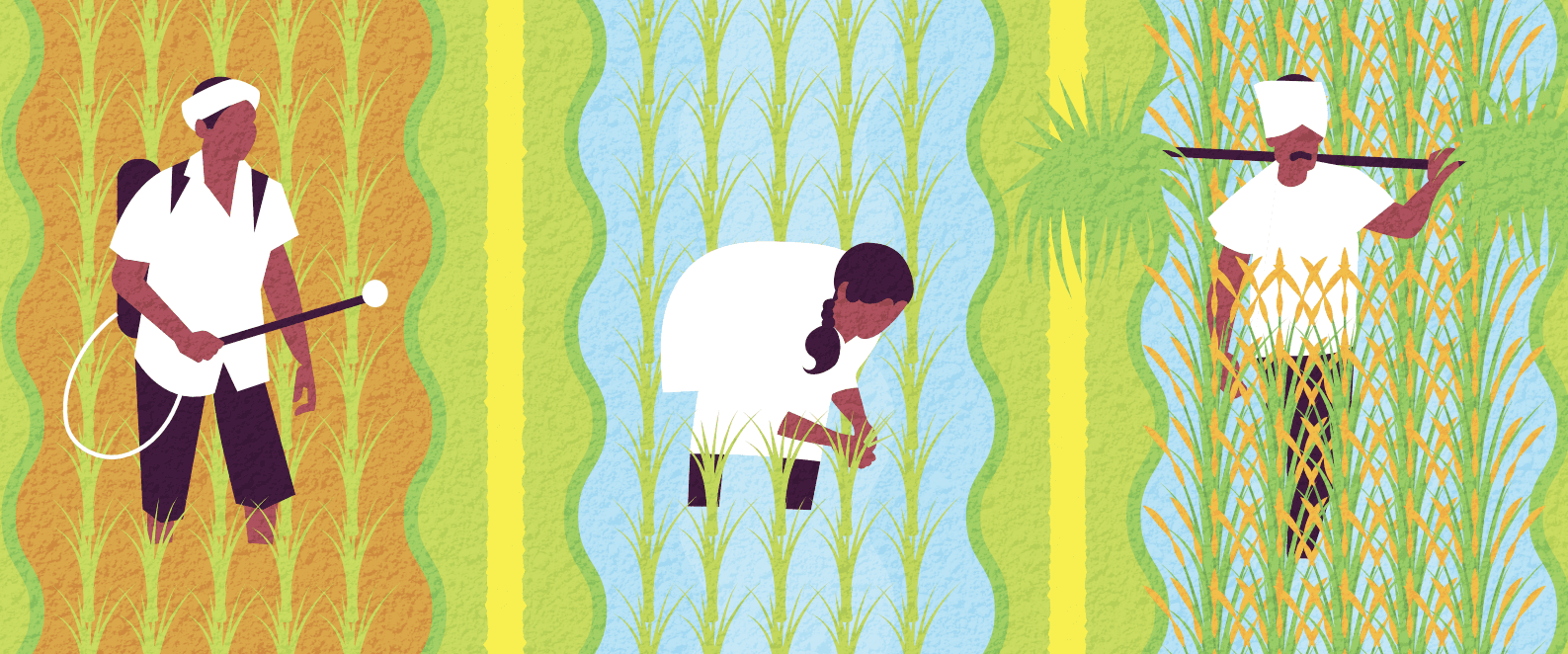
Rice feeds more people than any other crop on Earth, but growing it is a major source of methane, a greenhouse gas responsible for 30% of all warming to date. For Mitti Labs, that problem is also an opportunity. This year, we have reached a milestone that few climate startups accomplish this early: the issuance of its first carbon credits under Gold Standard, a leading certification body.
It's more than an issuance. It marks the moment Mitti Labs proved that its model — pairing satellite technology with deep, on-the-ground engagement in farming communities — can go from pilot to fully operational scale, and that the carbon credits it generates can be sold, retired, and turned into real income for the farmers who make them possible.
From field trials to 70,000 hectares
Mitti Labs was launched in 2023 with a simple thesis: if farmers adopt Climate-smart practices like Alternate Wetting and Drying (AWD), they can cut water use by 25% to 40% percent and methane emissions by 50%, all while preserving yields and boosting income. Three years later, that thesis has scaled into a program covering 70,000 hectares across six Indian states, supported by more than 500 field agents who live in the communities they serve. These field agents are young graduates who handle field boundary mapping, ownership validation, and farmer onboarding.
In June 2026, Mitti Labs completed the issuance of its first credits under the Gold Standard registry. Those credits were purchased and retired in the global carbon market almost immediately, a proof that global buyers see real, verifiable value in rice-based methane reduction.
To date, Mitti Labs' programs have saved 500 billion liters of water, or the equivalent of Bengaluru's annual supply*.
"The issuance of our first credits under Gold Standard marks a milestone for climate-smart rice farming practices. To us, this is just the beginning of a wider movement of mobilizing communities and carbon credit buyers towards a more sustainable future for rice farming." Devdut Dalal - Co-founder, Mitti Labs
Closing the loop with farmers
What sets Mitti Labs apart isn't just its technology stack, though that's considerable: a proprietary system combining optical and microwave satellite signals to monitor crop conditions and soil moisture at the field level, at country scale. It's what happens after the credits are sold.
Post-certification, Mitti Labs returns a share of sales proceeds directly to farmers through traceable digital payments, via India's Unified Payment Interface when possible. So far, the company has executed 6,000 individual payments, with flows expected to scale 20x by the end of 2026.
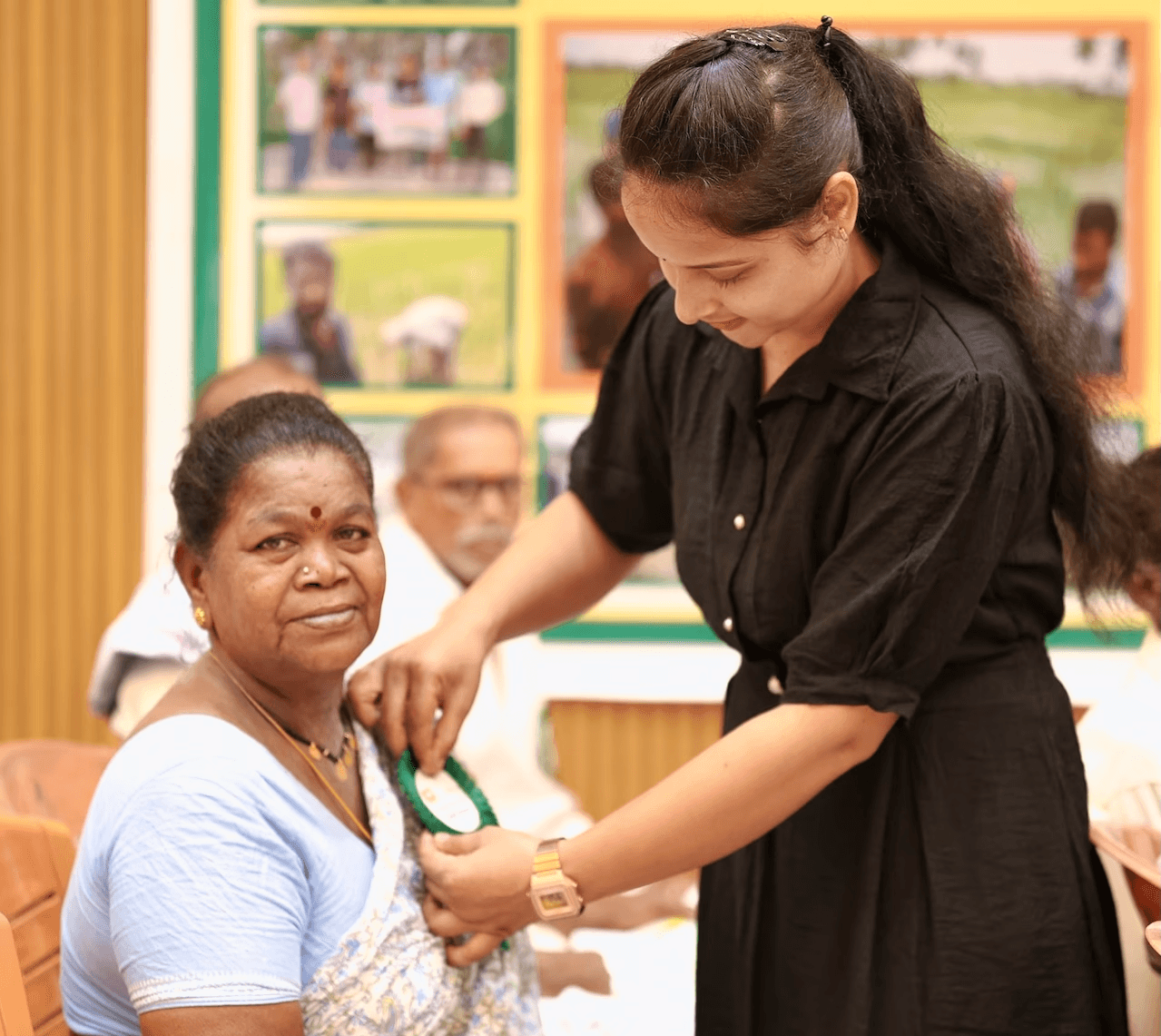
Farmers describe the shift in practical terms. Boddireddy Prathap Reddy, a farmer in Kannaraopet Village, said that with the AWD pipe, he now knows when to irrigate and when to wait, saving four to five rounds of watering each season. Ravula Bhaskar Rao, in Rayaparthy Village, said he once feared drying his fields would hurt his crops, but has since saved thousands of liters of water each season with zero loss in yield.
What's next
Beyond emissions and water savings, Mitti Labs points to broader ripple effects: an 8 percent revenue increase from rice sales, since AWD-irrigated rice fetches higher prices at the mill due to lower breaking rates, and progress against six UN Sustainable Development Goals, from no poverty and zero hunger to clean water and climate action.
For a company that started with field trials just three years ago, the first 10,000 credits are a proof point, not a finish line. Mitti Labs says this is the beginning of a wider movement to mobilize both farming communities and carbon credit buyers around a more sustainable future for rice — one of the world's most essential, and most emissions-intensive, crops.
*Our model calculates seasonal water savings by multiplying hectares under adoption by a fixed savings rate of roughly 3.75–3.8 million litres per hectare per season, held constant across all six tracked seasons (Kharif 2024 through Rabi 2027). As adoption scales from 10,000 hectares in Kharif 2024 to a projected 200,000 hectares by Rabi 2027, seasonal savings grow accordingly, from 38 billion litres to a projected 750 billion litres, with cumulative savings through Rabi 2026 reaching 488 billion litres. That total is in the same range as Bengaluru's estimated annual piped water supply: BWSSB data reported by India TV News (July 2026) puts the city's daily supply at roughly 1,450–1,500 million litres, which extrapolates to approximately 530–550 billion litres per year.
Offset your emissions with high-quality carbon credits
Previous article

Next article

Start your Methane Journey
Copyright 2025 © MittiLabs. All rights reserved.